Hang the DJ: Building and Breaking the System of Surveillance
- Hazal Turanlı
- 31 May
- 6 dakikada okunur


Introduction
When technology was not as developed as it is today, individuals would meet through friends, in institutions such as school, work, or in an entirely spontaneous and “destined” ways. However, with the development of technology to respond to social needs, these interactions have evolved into a digital world in a much faster and broader manner. In this new world of neoliberal digital culture, platforms play a crucial role in shaping individuals’ socialization and forming new relationships. These platforms promote themselves as beneficial technological tools that help individuals connect people more effectively by using algorithms and collecting behavioral data. Most of these platforms are dating applications that offer suitable matches for users. Within this framework, individuals’ emotional lives are transformed into usable data through which social interactions are no longer spontaneous but are calculated and commodified. In the search for nearly perfect compatibility, uncertainty progressively disappears, and transparency emerges. Like the products in a shop window, individuals present their personalities, hobbies, and the attributes they seek in a partner.
At this point, if digital platforms are spaces governed by algorithms, can love still be autonomous? This does not turn platforms into systems of surveillance that seek efficiency and collect data to generate the most optimal match? Can users be free in the system? These conflicts are explored through a dystopian perspective in Hang the DJ, the fourth episode of the fourth season of Black Mirror. In this episode, a dating system named “Coach”, as an algorithmic authority, not only matches who users date but also decide how long their relationships will last. The system promises to find the “ultimate match” for every user with a 99.8% of success rate by collecting more data through dates as repeated simulations and emotional interactions. Even though the system functions successfully, the main characters of the episode, Amy and Frank, show that human emotions cannot be commodified and controlled easily as data.

Love as Self-Exploitation
One of the major questions examined in episode is whether the platform is an efficient solution to the unpredictability of emotional life by significantly reducing uncertainty. Coach is perceived as a solution by planning every aspect of the dating experience, including the places where couples eat, the meals they “choose”, the houses they stay in, and even the small vehicles for transportation. While the system seems beneficial, because it promises emotional security by finding compatible partners and protecting them from failed relationships, the algorithm also rationalizes and stabilizes emotional life by not leaving a space for spontaneity to love itself. This situation reflects Byung-Chul Han’s critique of the neoliberal market logic of contemporary societies that encourages individuals to optimize themselves for the system of productivity and performance.
In neoliberal market, success is no longer a societal goal but a personal responsibility. So, in this logic, individuals are expected to continuously improve themselves to compete and become desirable. But does the market give everyone an equal opportunity to succeed? In Hang the DJ, Coach functions according to this market-oriented logic. At first glance, this platform’s accessibility appears as equal to everyone, however, users can only participate in relationships by obeying rules of the system. It is expected to optimize themselves through dating repeatedly to collect enough data to determine a “ultimate match”. System encourages them continuously to be productive by saying “You cannot just walk away, one day we will bring you together with your ultimate match.”
Using Byung-Chul Han’s framework, users, as a performance subject, get lost in the pressure to perform that is imposed by the system to conform its dating expectations. Amy and Frank carry Coach everywhere they go, chat with it, ask for advice and wait for them to find a new match. When they first met, they only had 12 hours. Even though they wanted to spend more time together, they followed the rules and believed in the system. In this sense, they are not controlled by external oppressions but instead, they voluntarily exploit themselves by internalizing the pressure of the system.

Trust Coach, Not Each Other
When they leave after their time is up, Amy begins to question the system: “I guess I don’t see the point in something that short.” For the system, even short interactions provide data to find the ultimate match, but for a human, emotions are developed over time. This is the point in which the conflict between human’s conception of love and the system’s understanding of love emerges. Love is now a constructed commodity that is selected as the most suitable option from a marketplace of collected data. This transformation of love can be connected to how digital culture replaces meaningful narratives with divided information and fast communication as discussed in The Crisis of Narration.
Traditional storytelling allowed individuals to create meanings as active subjects of their experiences. However, with the neoliberal market’s demand for rapidity and certainty, not only digital systems are developed to reduce time of the experience and make them measurable, but also collective interactions are replaced with passive participation. For this reason, even though they are questioning the system’s understanding of love, Amy and Frank continue to trust the system because it appears as a rational and objective superiority that functions as an abstract authority. By claiming that it knows them better than themselves even their deepest ideas Coach regulates behaviors, and by promising ultimate match, it gains trust.

Resistance to Digital Swarm
There are many scenes in the episode in which system is criticized and questioned by Amy and Frank. But, even when they start to think about it, if they are alone, Coach warns that they are acting against the rules of the system; and, if they are not alone, other users of the system start to watch them. So, not only Coach is a digital panopticon, but also all the users are. They are in a digital swarm as it is explained in In the Swarm.
Digital platforms turn individuals into a swarm in which they no longer act collectively as a community but only a mass that gives immediate reactions. In swarm, individuals are not in a relationship with each other even though they appear socially connected. That is what happens in Hang the DJ: The users are isolated individuals who take the system as a mediation of their interactions. Not only the system sees them as data, but also, they see each other as experiences that can be turned into data. That is the reason why they react to rebels against the system as users that internalized the external authority. Rebel means collapse of the system that gives certainty and impossibility of accessing new data.
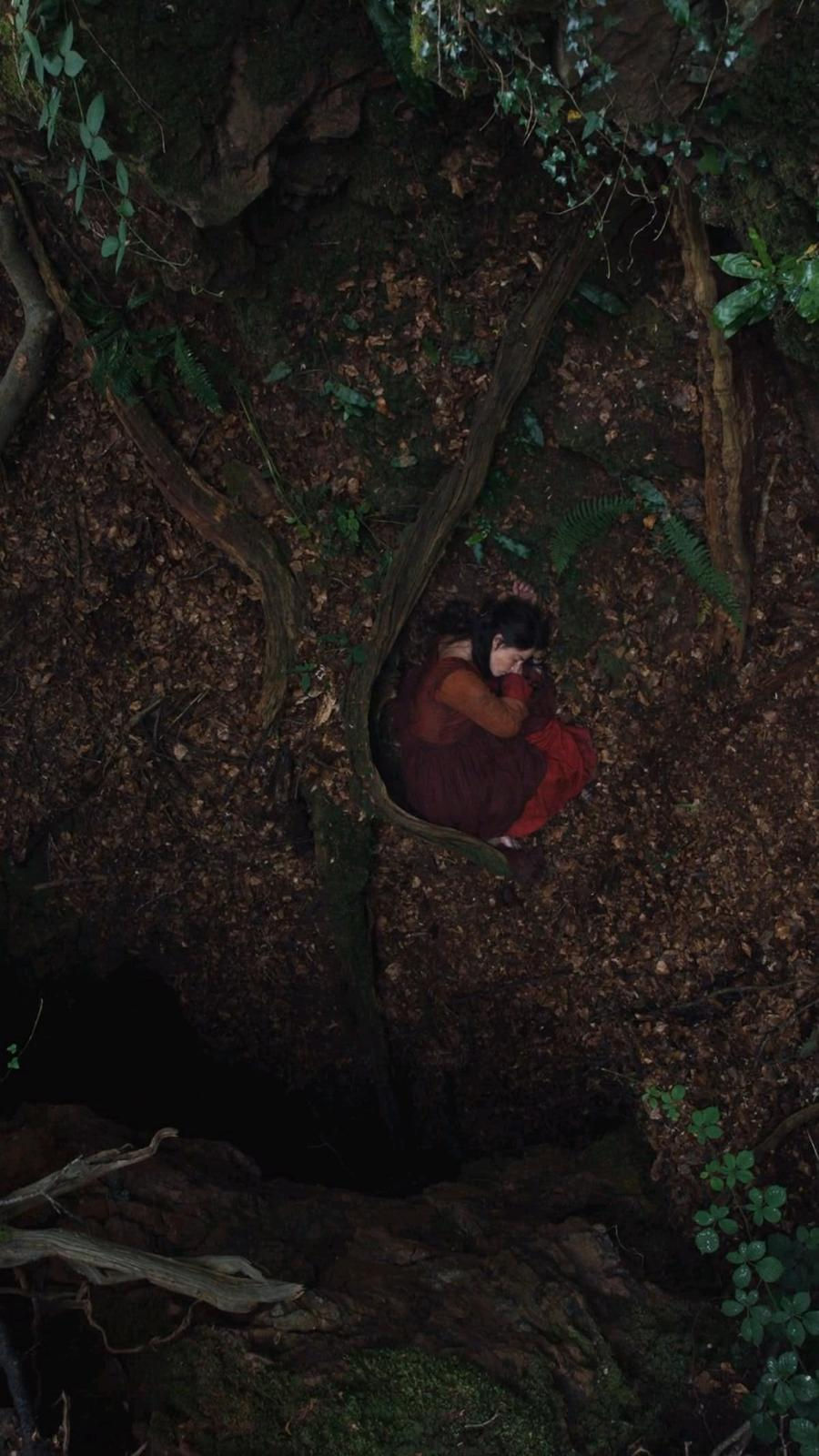
The breaking point of this digital swarm is when Frank checks the timing of Coach without Amy’s permission, and the system recalibrates the duration of their relationship, reducing it from five years to twenty hours permanently. From that moment, based on their previous experiences and doubts, they realized that they were in a simulation and decided to go through “the wall” to preserve their love, even though there was nothing behind it. This is the moment that the illusion of internalized external authority of the system collapses. Amy and Frank decided to go through the wall because they realized that the system only exists with the participation of the users, of them. In other words, human autonomy can resist a system even by knowing there is nothing beyond it. But can not run away from that, the resistance can be turned into usable data. The rebellion of Amy and Frank results are 99.8% success rate of the system’s compatibility test with completing 998 out of 1000 simulations ends with rebellion. Thus, while believing that they escaped from the illusion of the system, they returned to it, and that is the real illusion.

Conclusion
In conclusion, Hang the DJ questions the possibility of emotional autonomy in a digital platform that is governed by an algorithm that appears as a form of structural control. The system reproduces itself in every area where there is possibility of freedom. This algorithmic world is constructed based on the user’s participation which is also a tool of intense surveillance. It is not possible both to obtain what system will provide, an ultimate match, within the system and staying outside of its rules and requirements. In this data-driven system, love cannot be considered fully autonomous because it is measured by algorithmic processes as it is required by neoliberal market.
The episode leaves a way out in Amy and Frank’s relationship by showing that emotional experience cannot entirely be reduced to calculable and measurable data. Even if their attachment and decision to choose rebellion against the system becomes data, this little and temporary moment of rebellion escapes algorithm’s prediction. This is the moment that they give a meaning to their emotions outside the algorithm. It is suggested that as their choices are made by an algorithm, users are not free. Yet, they are not fully determined either. The meaning emerges with their real emotional engagement in the constraint of the system. Ultimately, Hang the DJ shows that these irresistible tensions between autonomy and system cannot be resolved in the digital culture that is governed by surveillance.
References
Brooker, C. (Writer), & Foster, T. (Director). (2017). Hang the DJ (Season 4, Episode 4) [TV series episode]. In C. Brooker & A. Jones (Executive Producers), Black Mirror. Netflix.
Chan-Olmsted, S., & Ki, H. J. (2023). Influencer marketing dynamics: The roles of social
engagement, trust, and influence. In The Dynamics of Influencer Marketing (pp. 99-122).
Han, B.-C. (2015). The Burnout Society. Stanford University Press.
Han, B.-C. (2017). In the Swarm: Digital Prospects (E. Butler, Trans.). MIT Press.
Han, B.-C. (2024). The Crisis of Narration (D. Steuer, Trans.). Polity Press.