
Sartre and Adler Hand in Hand: The Beginnings of Existential Psychotherapy and the Life Style Industry
- Ege Curl
- 20 Şub
- 17 dakikada okunur
Güncelleme tarihi: 22 Şub
The name of the famous XXth century French philosopher Jean Paul Sartre is known globally to most people with his later called existentialist method arguing for our existence predating what-ever essential qualification we or another person has deemed of us instead.
Most people are aware of this subjectivist (some say relativist) declaration of Jean Paul Sartre who demands that the individual subject shall be and is fully responsible in his or her act of choosing.
Sartre insists in his notorious declaration in Existentialism is a Humanism that when someone makes a choice, they do not only decide what is best for themselves but they actually choose for everyone. Putting that into more philosophical terms would mean that, as stated by Emmanuel Kant in his Metaphysics of Morals for example, a person needs to act or do in such a way that the maxims of their action or thoughts need to be as if universalizable; meaning indicating a universalizable “form” and perhaps content.
As everyone is aware by now that Sartre follows closely in these steps taken by Kant, and before him Rene Descartes in his “I think, therefore I am” for the radical subject as the epistemological cornerstone of our worldview.
When Sartre states that this act of choosing is not some aleatory process, he in his own way radicalises the concept of “liberty by causality” introduced by Kant following Descartes and can even be said to bring it down to earth while making it encapsulate the everyday lived experiences of people.
Sartre himself knowingly argues in Existentialism is a Humanism over the fact that he has in fact vulgarised the problem of choice into an act of a personal choice. Although he quite coherently argues for this type of choosing in cautioning that this act of choosing is not to be taken lightly and includes in itself not only being able to handle the responsibility of it for oneself but also for other people as well and vis versa or else, as he says, it will only be a choice done in “bad faith” which does not constitute a choice at all in his view. This idea is further elaborated in his more famous adage that states that it is not only that we have to choose in order to be free but that we are actually “condemned to be free”.
We will briefly leave this paradox of freedom being determined, and also to say that freedom always being in a sense a “freedom by causality”, and not a freedom from causality, aside for now.
In turn, at first glance this may sound limiting but in actuality being aware of one’s determinants can be a source of great relief, not and never in a lackadaisical and infantile way of either completely giving into them or completely rejecting them in one breath, but rather being able to do otherwise or to think otherwise (as says early radical feminist Luxemburg for example).
But following Sartre and Simon de Beauvoir, knowing and doing, doing and knowing are quite dialectically connected and are at most times hard to separate from each other. And if I have vulgarised the writings of Sartre, in my defence it is not with ill intent but to introduce the other figure in which, unbeknownst to Sartre, a decade or so earlier in the mid-1920s has written what Sartre two decades later has demanded in the same text as an “Existential Psychoanalysis” awaiting its Freud (Primer,1999, page 43, Herold Mosak).
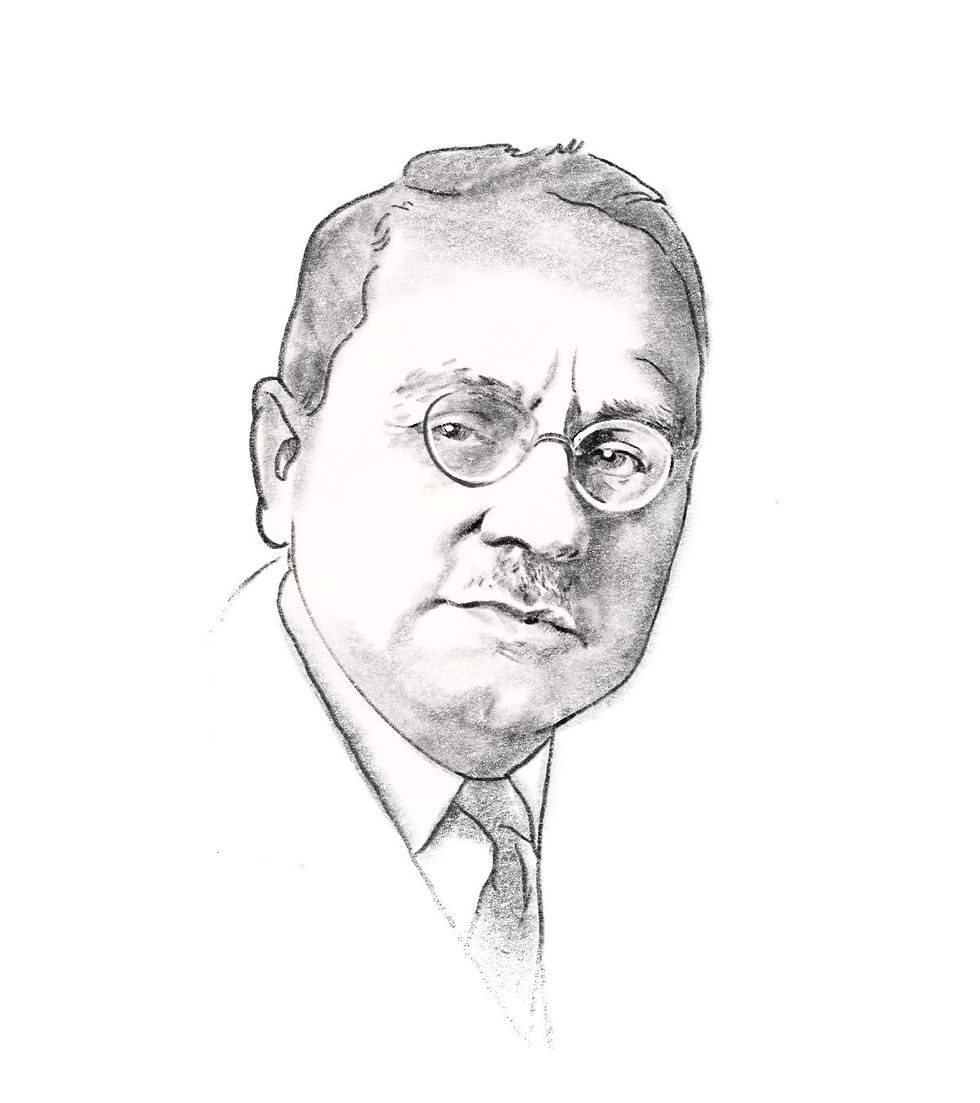
The figure of ophthalmologist and early psychoanalyst Alfred Adler is little known compared to the likes of Jean Paul Sartre but especially in the field of psychology itself. Alfred Adler himself was a Viennese physician born in 1870 who switched to a general practice while working with people in a circus so the tale goes after briefly becoming an ophthalmologist. According to the website of the Adler University, Chicago, Illinois, it is at this time that Adler supposedly has made the connection between poor living conditions and underlying medical conditions as the foundation of his whole approach of community psychology or social psychology.
Alfred Adler is often referred to as the “third giant” next to Sigmund Freud and Carl Gustav Jung as one of the early pioneers of psychoanalysis as a lesser-known student of Freud besides Jung (with both of them breaking with Freud in the late 1910s to found their own approach to psychoanalysis). In order to demonstrate the importance of Alfred Adler in psychoanalysis, the psychiatrist Henri Ellenberger in his book The Discovery of the Unconscious, 1970, says that Adler was one of the most wildly drawn upon but seldom attributed people in psychoanalysis comparable to the treatment of Nietzsche by Freud. In the following, I will show that this qualification still holds somewhat true today with the cooptation of Adler by what I will refer to later in this essay as the life-style industry.
Whilst Jung chose to delve more into the realm of the semantic, symbolic, and “obscurantist” – so says psychoanalyst Eric Fromm commenting on the autobiography of Jung in his short text Prophet of the Unconscious, a discussion of “Memories, Dreams, Reflexions” by C. G. Jung”, 1963, Adler’s approach to psychoanalysis called Individual Psychology was arguably more grounded and in tune with the social and material realities that played a key role in determining the contents of people's psychic lives more concretely.
For example, in another article titled The Present Crisis of Psychoanalysis, 1967, page 2, Erich Fromm has another comment to make, now, criticizing Adler as “knowing how people ticked” but lacking the “profundity of Freud” and representing the “superficial optimism of the new lower middle classes” before and after the First World War.
I mention these criticisms here because I find that they are not completely baseless at understanding Individual Psychology as we will see shortly. In fact, we will see that it is often said that Adler himself preferred to speak in simpler terms and is, if not optimistic, can be said to have a bit of a pragmatic approach to “life’s problems”.
This penchant will be more evident in his main work What-life-Could Mean To You, 1931, which is what I will be using in this essay as a main point of comparison between Sartre and Adler with minor citation from Adler’s other notable works such as Neurotic Character, 1911, and also The Problem Child, 1930, with minor citations from complimentary literature such as Primer of Adlerian Psychology, 1999, written by Harold Mosak, or a more recent and accessible interpretation of Adler that can be found in The Courage To Be Disliked, 2013, written in the form of a Socratic Dialogue between a young sophist and an old philosopher set in contemporary times.
We can first of all start with the portrait of Adler given by Erich Fromm which may be seen as a bit overblown and reductive characterisation but as stated before may indeed contain some truth.
At first glance, Adler’s so called Individual Psychology may seem to lack the glamour found in the synthesised symbology dotted through the psychic landscape that often produces and is clogged by the very near-free traumatic associations or other associative interactions of signs and symbols arising from the interaction between personal meanings and meaning in general condensed in the mind at one hand and by the interaction of the psyche and its principally real environment that also cannot escape or fall outside of its own processes on the other hand.
Putting this jargon aside, it is inevitably true that Individual Psychology seemingly lacks some of the rich dream-like imagery that we are used to hearing while discussing psychoanalysis, psychology or psychiatry even today.
To this end I would begin with the point that seems most obvious to me at first glance between comparing the philosophy of Sartre to the psychoanalysis of Adler. When the both of them use the term of reality in order to refer to this most general cluster of things and people that surround us, they generally seem to refer to a shared concrete reality rather than a more abstracted one. In Existentialism is a Humanism, Sartre is even accused of condensing this concrete reality and the lived experiences of people of this reality to a purely subjectivist, circumstantialist, ultimately relativistic, and pen-ultimately a liberal one by an interlocutor that Sartre calls M. Naville. This political denominator is by no means an accidental one because, as M. Naville says, a liberal reality for him is an understanding of reality devoid of things; this can be anything, a table or a chair for example, left purely to the subjective imagination of a choosing subject. Of course, Sartre rebuts this argument when he says that causality in itself is not a given and the relationships that we establish between cause and effect and things and people in general are subject to change over time. This is where the famous adage of Sartre “hell is other people” sums this up quite well even though there are a lot of common misunderstandings about the meaning of this phrase.
Sartre himself is not simply talking about the social anxiety someone gets when being observed by other people and essentially being pressured into conforming to the preconceived image that they make of us in their heads and us of them. Even though that part exists as well, it is only one meaning of this phrase. The broader and dare I say existentially loaded part of this formulation is the constant dynamic between subject and object behind being perceived through the gaze of another person, meaning that of being objectified in the eyes of another and ultimately experiencing the feeling of being stripped of one’s own agency in being reduced to an object of perception; an object of limited ends and possibilities by another person.
Why is this important in consideration to Individual Psychology? It is very much so because in one of his magnum opus’s What Life Could Mean to You, 1931, Adler proclaims that “Every problem is an interpersonal relationship problem”. I will argue that Adler states more concretely and objectively what Sartre says more abstractly and subjectively.
Here I am not making a point of scientific objectivity nor am I declaring the superiority of the objective over the subjective or vice versa. Adler seems to share in the same empirical and qualitative scientific ideal that he inherits from Freud. Sartre seems to have a more subjective and qualitative approach.
Further on this point, Erich Fromm writes, in the articles cited above, about the more rational and scientific approach of Freud to psychoanalysis compared with that of the more romantic and obscurantist approach of Jung.
Although Individual Psychology inherits this high scientific ideal from Freud, it nevertheless stays grounded in the daily problems experienced by people throughout their lives, states Adler in the first chapter of his book. The definition that Adler himself gives of Individual Psychology is the following:
''Individual Psychology arrives at the same conclusions in a scientific way, proposes a scientific technique. It makes, I believe, a step forward. Perhaps science, by increasing the interest of human beings in their fellow human beings and in the welfare of humankind, will be able to approximate closer to the goal than other movements, political or religious.” (page 9, paragraph 2 of the same).
We can see that for Adler his approach to psychology can be defined as increasing the social interest; Gemeinshaftgeful, “of human beings in their fellow human beings and the welfare of humankind” in general.
Just as Sartre’s existentialism, Adler’s Individual Psychology can sound naïve, humanitarian, liberal, and even optimistic, but it is anything but that as Individual Psychology is inspired by the key concept of an initial struggle for power over getting advantage in life relative to others in an environment.
Amongst Adler’s three main influences is a certain late XIX century Prussian philologist Fredrich Nietzsche and one of his key concepts of the “will to power” but Adler’s use of this term differs significantly from that of Nietzsche’s that actually cites by name in his book to the chagrin of his teacher Sigmund Freud and his Oedipus Complex underlying the struggle for influence between the Id and the Super Ego that create an Ego.
To my understanding, the use Adler finds in the concept of the “will to power” can be qualified as two-fold. Firstly, compared to the usage of Nietzsche that uses it in a kind of historical but idealistic and conceptual way, in my opinion, Adler’s use of that term is far more specific and concrete. Secondly, and more importantly, the “will to power” lays the foundation for the two essential concepts of the “Inferiority Feeling” leading to an “Inferiority Complex” in Individual Psychology as a whole.
It can be argued that the general form of the “will to power” outlined by Nietzsche finds a more malleable and useful content in the “Inferiority Feeling”.
If we have the space for it in this essay, we can also discuss the historicity or a-historicity of the two usages between both authors but I think it has to wait for a follow-up second essay where we can afford to go into more detail about both the use and abuses of these terms by their authors and in what I would coin as the lifestyle industry.
Adler goes into much more into detail in the third chapter of his book titled “Inferiority and Superiority”, but for now It suffices for us to say now that the “Inferiority Feeling” for Adler is both general and specific at the same time. It is a sort of relative disposition that all people have while struggling throughout their every-day existence.
Why is the “Inferiority Feeling” a relative disposition instead of an idealistic disposition such as the “will to power”?
First of all, an "inferiority feeling” does not arise out of nowhere but always exists in a predetermined context a person is born into, is raised, inhabits, or leaves for another. For instance, in chapter IV of his book, Early Memories, Adler says that this relativistic dynamic between the environment a person is born under and raised even influenced the perception of their memories. Essentially, what is suggested in Early Memories is the lack of an essence in determining, even in an early age, what these memories would mean to a person in what they choose to become in the future.
Every “Memory is a memento” says Adler in chapter IV that represents the forming Ego of a person; “…his first totalling-up of appearances, his first more or less complete symbol of himself and the demands made of him''. The reason why this chapter is called Early Memories is because Adler himself is a big affirmer of the human capacity for change, but cannot completely rule out the formatting of the whole of our personality by our early childhood experiences.
Adler says in page 14 of his book while referring to this chapter:
''Memories are important only for what they are ''taken/as'' ; for their interpretations and for theory bearing on present and future life''.
Going further, most of the time, if left uncorrected, Adler says this early synthesised interpretation of life can become a huge hurdle in dealing with future problems that life decides to throw at us.
What are these “problems of life” that Adler keeps on referring to throughout his whole corpus?
What Adler precisely means when he uses the term “meaning of life”, in the first pages of his book, is that in every conscious or unconscious attitude or thought a person has, that nearly every facet of their psychic life “…behaves as if he could rely upon a certain interpretation of life.”
This is too similar to Sartre that says that we are “condemned to be free” because as for Adler, it is nearly the exact same, because human beings are condemned to “this realm of meaning” (page 1) because a “meaning of life” must be carefully chosen by ourselves or else we are stuck in the realm of a “private meaning”, a “private logic”, or more simply a fantasy realm. We must have the courage to face our life’s problems and not to look away from them in order to give meaning to our lives.
This inferiority feeling contains nearly the same historicity as Nietzsche’s will to power with some key difference as stated above. Even though it can be taken as an ontological and metaphysical point of origine, it cannot be completely reduced or driven to a theoretical realm as Adler clearly states in both chapter III and IV that even though the feeling of inferiority starts at childhood, it continues for all our life because it is not a simple point of origin but a point of comparison that arises from a “logic of comparison” within the context of our environment for the pursuit of an advantageous position within the same context of that environment (Primer,1999).
If the context of this environment changes, in Adler’s theory, it is this very “logic of comparison” of seeking advantage that must become “adaptive” or else it will stay “maladaptive” which may manifest as an “Inferiority Complex”. According to Adler, an “Inferiority Complex” arises from this mal-adaptive logic of comparison that either operates with a procedure of both thought and action that is either dated because of it coming from our childhood experiences, ill-suited for the new environment that we find ourselves in, or in complete isolation with its environment all together.
According to Adler, isolation itself comes from an either ill-suited meaning of life or of never having had the tools to develop the necessary abilities required in order to properly forge a meaning of life.
Here I find that the word adaptive holds two meanings. First it is the capacity of a person to live in a community or society at large whilst having the cognitive tools required for creating, building, and maintaining proper interpersonal relationships with not just things and people but, secondly, the world as a whole, likes to say Adler.
Neither for Adler nor for Sartre, this existential meaning that we have decided upon is an absolute one. More so for Adler, that goes even further in saying, at page 4, saying that a meaning of life a person has decided to give their lives can only be mistaken and in need of correction but not absolutely wrong:
“No one possesses the absolute meaning of life, and we may say that any meaning which is at all serviceable cannot be called absolutely wrong’’.
This is a milder formulation of Sartre that says that a choice can only be done in “bad faith”, which is never a choice at all but, instead, suggests that being able to take the responsibility of a true choice is always right and correct. Reformulating the argument of Sartre in this way gives it a moralizing aspect that is absent in Adler that abstains as much as he can from moral judgements.
Not to say that a “meaning of life”, also called a “style of life” or a “fictive guiding line” interchangeably by Adler, is not a judgement in itself. In individual Psychology a meaning of life is always a relative judgement that serves a preparatory function; to prepare us for the future problems of our lives.
In order for our own fictive meaning of life to be useful to us in serving a preparatory function for the future, it must be adaptive (the defence mechanism of “adaptation”), and the less it is relatively useful in a predetermined context, the more it is “non-adaptive” and has the danger of morphing into a neurosis or psychosis according to Adler.
According to Individual Psychology neurosis and psychosis comes from the framework of isolation that our “private meanings” of life imposes on us which alienate us from the rest of the outside world of things and people (see also Erich Fromm, The Art of Loving, beginnings of chapter II).
To my understanding, the terms of use and uselessness for Adler depends on the quality of the fiction with which we formulate for our meaning of life. It all depends if the fiction we make is an “adaptive fiction” or “mal-adaptive fiction” (Neurotic Character, 1911). The synonym of "Fictitious Guiding Line” is a direct inheritance from Kant that talks of a “ligne directrice” for thinking in general.
If we rephrase this in a more philosophical sense that it already possesses, in my opinion Adler succeeds in taking Kant one step further in suggesting that fact and fiction, narrative and fiction, or truth and falsehood are dialectically related and cannot be thought in isolation from each other. His response of a guiding fiction with an adaptive quality is for him already the state of a normal person that jumps from adaptive fiction to adaptive fiction in their day to day.
In stating this, I am not at all saying that life itself or our Ego is entirely a narrative fiction, even though it serves a kind of narrative function. It all depends on the quality of that fiction that we make, that is to say, on how the fiction of our thoughts and action, and their interpretations that we develop in our lives and existence in general hold up to empirical scrutiny in our lives. At this last point, I would find Adler more realistic than Sartre.
In order to look into Adler’s dialectics, one does not need to look further than chapter II titled Mind and Body that explains in detail how the mind plays the role of a goal setter for the body that does the moving. I find that the dialectical side of this chapter on Adler’s corpus is reduced or ignored in favour of his more holistic approach which reduces its overall potency and is also a sign of the computation of Adler’s work by the lifestyle industry concerned more in commodifying and creating envy for the life styles affordable for rich people as luxury consumer goods. Both philosophically and psychologically, a Holism never should lack its dialectics even if it is left in the shadows, because it is those very shadows that hold sway of the conscious. The understanding of those shadows and making them surface in our minds as much as possible is one thing, but having the courage to act upon this newly arrived revelation is another. In individual Psychology, trying to develop a thoughtful courage to act is Adler’s antidote for neurosis and psychosis.
We have somewhat finished the theory side of the book but unfortunately have no space to get further into the latter chapters from V to XII of Adler’s What Life Could Mean To You which is the practical part of the book where Adler deals directly with issues from school and family influences of the formatting of a person, to crime and its prevention to occupation and love in practical terms with many examples. We also don’t have the space to consider Adler as one of the premier figures behind family therapy and child guidance counselling as both Adler University and Primer for Adlerian Psychology suggests. Nor do we have the space in this article to explore the empirical and scientific side of Adler compared with the subjectivist and sometimes anti-scientific side of Sartre in the latter half of the 20th century. Most regrettably, I do not have the necessary space to elaborate further for the enormous recuperation of the legacy of Individual Psychology by what I would like to coin as the lifestyle industrial complex.
I would like to finish this article while making some further comments and wishes for what a true Individual Psychology following Adler should look like in the future.
This empirical and un-retractably dialectical holism of Adler in approaching life problems as he says is what I want to bring attention to in this essay which is what I find to be lacking in what I have seen in a limited fashion from the entire current corpus of Adler University in Chicago or even more so the United States based and European based schools of Individual Psychology in general.
My point is not to make a reductive polemic between the imaginary lines of East and West, between the so-called civilized and un-civilized worlds. Adler himself was a Viennese physician after all, in which case, after his clinics and counselling practices were shut-down due to his Jewish heritage by the rise of Nazism in the 1920s, he fled into the United States in the 1930s with his family.
I am somewhat aware of the fact that current Adlerian psychological and counselling practices exist outside of Western countries such as Japan, South Korea, and China. What I call for in here in discreet terms is no little than the full-on revitalization of an empirical and scientific, and dialectical heritage, and so inevitably a philosophical tradition, that Adler draws from that has been, in my view, coopted inside of a broad life style industry since as early as the booming 1930s which is based but is not limited to the stated above countries.
I would also strongly propose the invention and birth of a new Adlerian Literary Tradition based on his ideas of a "fictitious guiding line” as literature encompassing many genres such as Fantasy, Science Fiction, and nonfiction such as replacing those awful self-help books, which also seems to have a reduced presence for whatever reason in the recent clinical literature as well as general literature about Adler. Clearly apparent in the whole corpus of his works, which is not that grand but still, in my opinion, successfully presents a coherent, novel, not to mention practical, synthesis of if not both Kant and Nietzsche alone. Also, his earlier work of Neurotic Character, 1911, also called Neurotic Disposition as its earlier title, not just deserves but can withstand side by side with the above stated authors in my view.
On another note just before finishing, as a sort of preliminary introduction into the potential second part of this essay which will tend more towards the practical side and be filled with more example, I would like to mention next to the lifestyle industrial complex that I briefly touched upon here, the extremely well aged and most important and progressive views that Adler holds about the compensation of disabilities that are completely beyond his time and even our own in some senses right next to his more date views about variant sexual identities that he discusses in his book which are undistinguishable from that of Freuds and subsequently shows him a still being somewhat a product of his time as the subtracted XVIIIth chapter from Neurotic Character that is subtracted unanimously and uncontrovertibly nearly in every subsequent edition since the first or second for very good reason. But it is so human a thing for the supposed master of the fictions of the mind to have some of his own fictions which he has allegedly and thankfully repented in his later years.


